How to tell
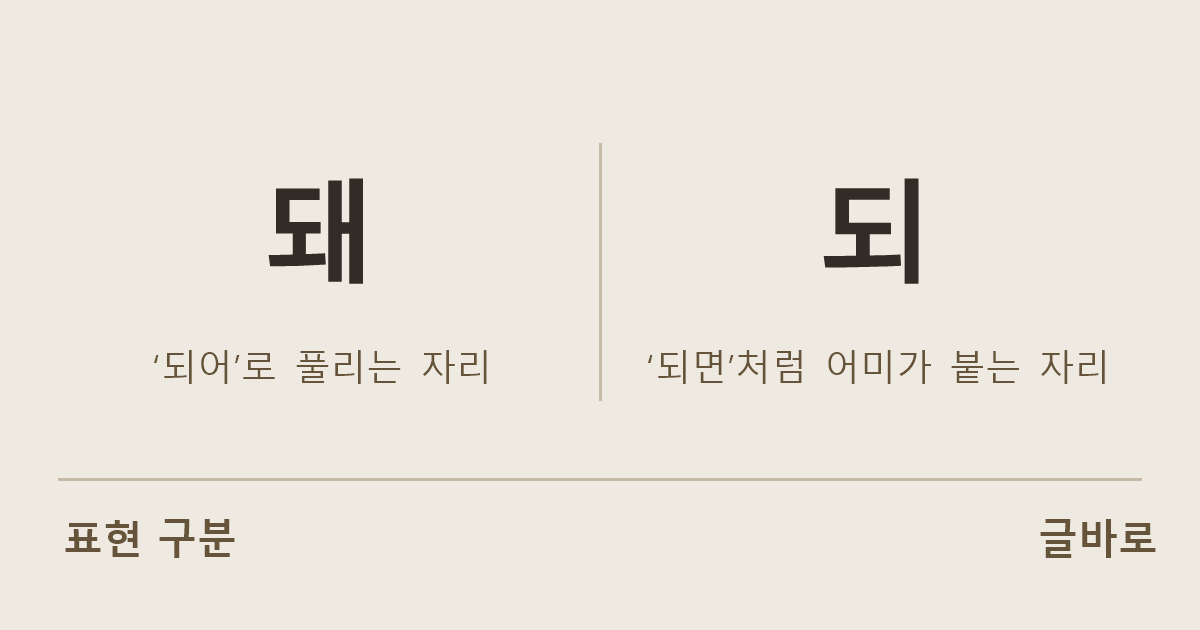
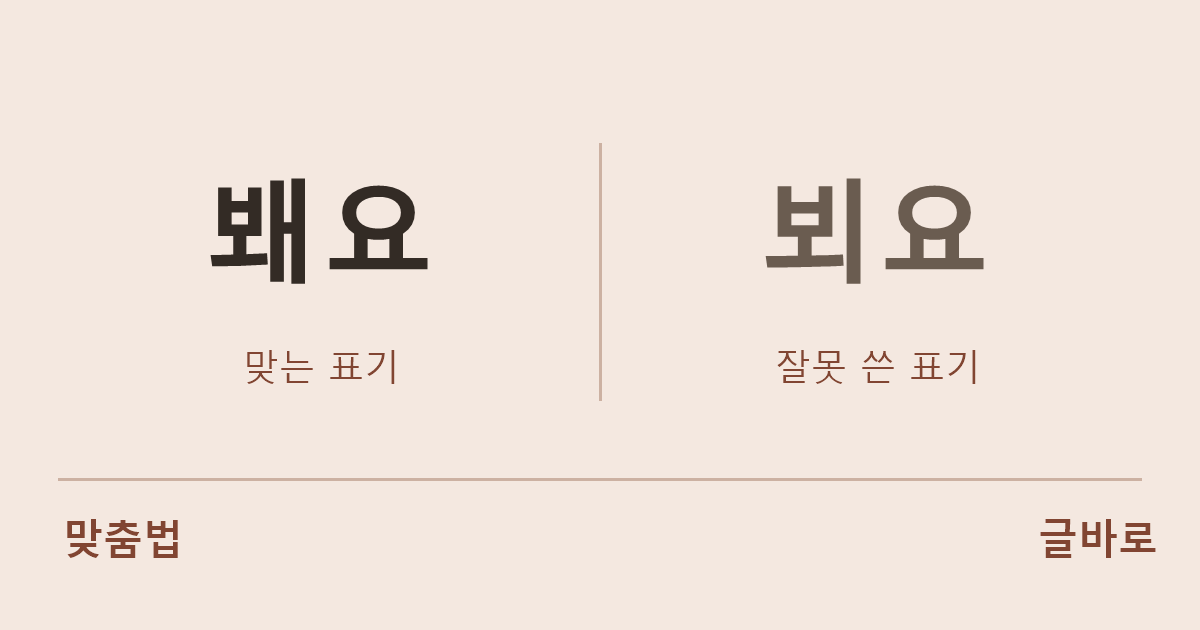
Start with 뵈다, a respectful verb for seeing someone. Attach the polite ending -어요 to the stem 뵈- and you get 뵈어요. Contract 뵈어 to 봬 and keep 요: 봬요. You can use either the full or contracted form in the same sentence.
Expand 봬요 to 뵈어요 when you check the spelling. For 뵈면 (“when I see you”), -면 attaches straight to 뵈-, so keep 뵈.
In context
A text to confirm a meeting
If the time is already agreed, 그럼 내일 세 시에 봬요 means “Then I’ll see you tomorrow at three.” If the time is still up for discussion, ask 내일 세 시에 만날까요? (“Shall we meet tomorrow at three?”). The first message closes an agreement and the second asks for one.
Use 뵈다 when the person you are seeing is someone you want to show respect to. With a close friend, 내일 봐 (“See you tomorrow”) is a more casual choice. In a work email confirming a first visit, 내일 오후 세 시에 뵙겠습니다 uses a more formal ending. Include the place or time zone if your reader needs it.
Use the ending as a spelling check
The contraction appears in 뵈어서 → 봬서 as well. 직접 뵈어서 반가웠어요 and 직접 봬서 반가웠어요 both mean “It was nice to meet you in person.” In 내일 뵈면 말씀드릴게요, however, -면 means “if/when.” There is no 어 to contract, so write 뵈면.
Before sending, check the time, the person you are addressing, and the verb ending separately. If you want to switch from a casual text to a formal confirmation, replace the whole closing with 뵙겠습니다 rather than altering a letter in 봬요.
Editing example
Confirming a client visit
- Draft
- 목요일 오전 열 시에 뵈요.
- Edited
- 목요일 오전 열 시에 봬요.
The text confirms that you will see the client at ten on Thursday. Expand 봬요 to 뵈어요 to check that the ending is present. If this is a first contact and you prefer a formal sign-off, you can write 목요일 오전 열 시에 뵙겠습니다.
Examples
- 그럼 내일 오후 세 시에 봬요. Then I’ll see you tomorrow at three.
- 다음 주 화요일에 뵙겠습니다. I’ll see you next Tuesday.
- 직접 봬서 반가웠어요. It was nice to meet you in person.
- 내일 뵈면 말씀드릴게요. I’ll tell you when I see you tomorrow.
Questions and answers
Can I write 내일 뵈어요?
Yes. 뵈어요 is the uncontracted form of 봬요, and both are correct. 뵈요, without 어, is the form to avoid in this closing.
Does 봬서 follow the same rule?
Yes. It shortens 뵈어서. In 직접 뵈면 말씀드릴게요, the ending -면 attaches directly to 뵈-, so it stays 뵈면.